Bussiness opportunities in India

1.Bussiness opportunities in Software Field

Their is wide scope of bussuness opportunities in Information & Technology and software field.The government also encourage this type of bussiness opportunities by providing space and subsidy for their development.
India is turning itself into a dominant force in global business outsourcing as far as software development is concerned. With nearly one billion inhabitants, India already lays claim to producing an impressive 30% of the worlds IT professionals and to generating more than 6 billion $ in software exports in 2002-2003. By the end of 2012-2013 it is nearing 100 billion $ mark. More so are the powers of business outsourcing.
Tapping Internet usage
The mobile population in India exceed the PC population, paving way to increase in the usage of software. The e-governance and business outsourcing in India will be given a boost. This will, in turn lead the people to have easier access to low cost internet access devices. The development of localized content will boost airtime usage as well as the revenues of mobile phones. Research and development in the areas of mobile commerce as well as embedded software will open rapidly growing new market segments in India.
Setting up your IT Company in India
The rules and regulations to be kept in mind while considering business outsourcing and setting up your IT software and Services Operations in India.
1. For General Indian Citizen / Company
No prior permission of the Govt. of India is required for setting up IT software and services in the country. An individual Indian citizen can set up IT software and services in India through the following ways.
As an individual / Proprietor.
As a partnership / firm / trust.
As a Company registered under Indian Companies Act 1956
New Schemes to support IT
Domestic Tariff Area
When the primary focus is to sell, in the Indian domestic market - these units can be set up anywhere in India.
All normal laws apply
No concession is available on import duties
Exports are permitted
Under the special scheme EPCG (Export Promotion Capital Goods Scheme) of the Ministry of Commerce, zero duty import of capital goods against export obligations is allowed:
Special Economic Zones (SEZs)
SEZs areas are free from the rules and regulations governing imports and exports in export production.
SEZ areas give full flexibility of operations and the import duty free capital good and raw material.
Movement of goods to and fro between ports and SEZ are unrestricted and the entire production in the area has to be exported.
The first two SEZs were set up in Positra in Gujarat, Nangumery in Tamil Nadu and in various other parts of India.
Export Processing Zones (EPZ)
Located in Cochin, Falta, Kandla, Chennai, Noida, Santa Cruz, Vishakhapatnam, and Surat.
Units in these zones has zero import duty, special 10 years income tax rebate and availability of space.
No restriction on quantity of domestic sales.
100 percent Export Oriented Unit (EOU)
EOU is similar to EPZ, in that it need not be physically located at EPZ.
Software Technology Parks of India (STPI)
Special scheme under the Ministry of Information Technology, located at Noida, Navi Mumbai, Pune, Gandhinagar, Hyderabad, Banglore, Chennai, Bhubaneshwar, Jaipur, Mohali, Trivandrum etc. Zero import duty on all capital goods. Availability of infrastructure facilities like high-speed data communication links etc.

latest government vaccancies

Government Jobs in June-July 2014

1.Staff Selection Commission (S.S.C), Raipur.
No. of Post – 21
Name of Post – Junior Chemist, Junior Technical Asst., Storekeeper, Horticulture Asst. etc,
Last Date: 18.07.2014
For more details click here......
2.Centre for Railway Information System (CRIS), New Delhi.
No. of Vacancies – 55
Name of the Post – Asst. Software Engineer- 45, Asst. Network Engineer- 15
Last Date: 10.07.2014 for offline and 15.07.2014 for online.
For more details click here......
3.Union Public Service Commission (U.P.S.C)
No. of Vacancies – 375
Name of the Post – National Defence Academy- 320, Naval Academy- 55
Last Date: 21.07.2014
For more details click here......
4.Central Warehousing Corporation, New Delhi.
No. of Vacancies – 30
Name of the Post – General Manager (General, F&A), Dy. General Manager (General, F&A), etc,
Last Date: 05.08.2014
For more details click here......
5.Goa Shipyard Limited, Goa.
No. of Vacancies – 10
Name of the Post – Asst. Superintendent (Finance & HR)
Last Date: 17.07.2014
For more details click here......
6.Directorate General, Indo-Tibetan Border Police Force.
No. of Vacancies- 39
Name of the Post – GDMOS and Specialist Doctors
Last Date: 45 days from date of issue of Publication.
itbpolice.nic.in
7.Garden Reach Shipbuilders & Engineers Ltd., Kolkata.
No. of Vacancies – 33
Name of the Post – Manager, Deputy Manager and Asst. Manager
Last Date: 18.06.2014 for Online and 03.07.2014 for Offline.
For more details click here......
8.Indian Ordnance Factory, Field Gun Factory, Kanpur, U.P.
No. of Vacancies – 18
Name of the Post – Pharmacist, Supervisor, L.D.C, Medical Asst., etc,
Last Date: 21 days for date of publication for Online and 28 days from date of publication for Offline.
For more details click here......
9.National Green Tribunal, New Delhi.
No. of Vacancies – 23
Name of the Post – Private Secretary, Assistant, Hindi Translator and Stenographer
Last Date: 31.07.2014
click here for more details........

Job posts in BEL Pune May-2014

BHARAT ELECTRONICS LIMITED (BEL) (A Govt. of India Enterprise)
D&E Department, Pune (Maharashtra)
Bharat Electronics Ltd., a Navratna Company and India’s premier Professional Electronics Company, requires Engineers at its D&E Department, its Pune Unit :
Engineers : 08 posts (Mechanical - 4, Electronics - 4), Pay : Rs. 12000/- consolidated per month, Age : 25 years, Qualification : First class in BE / B.Tech (Electronics / Electronics & Communication / Electronics & Telecommunication; Mechanical) How to Apply : Candidates meeting the above criteria may mail the filled in application in the prescribed format tohrdpune@bel.co.in on or before 29/05/2014.
Please visit http://www.bel-india.com/recruitment for more information and application format.

CDAC Noida Job vacancy May-2014

Canter for Development of Advance Computing (CDAC),
Anusandhan Bhawan, C-56/1, Sector-62, Noida - 201307 (UP)Centre for development of Advanced Computing (C-DAC) a scientific society of the Ministry of Communications and Information Technology, Govt. of India. The Noida Centre of C-DAC is looking for bright and result-oriented persons for the following temporary positions at Noida and Mumbai :
Medical Consultant : 01 post
Consultant (VLSI) : 01 post
Consultant (ERP) : 01 post
Project Manager - I : 08 posts
Project Technician - II : 01 post
Application Fee : Rs.500/- (No fee for SC/ST) payable by Bank DD in favour of CDAC, NOIDA.
How to Apply : Apply Online at CDAC Noida website up to 30/05/2014.

IIM Indore Non Teaching Positions May-2014


Indian Institute of Management (IIM), Indore
Pigdamber, Rau, Indore 453331 (MP), India
Online applications are invited for the following 33 non teaching job posts in IIM Indore following :
Legal Officer : 01 post
Office Level - 1 : 01 post
Executive Assistant : 16 posts
Executive Assistant (IT) : 01 post
Library Professional Assistant : 01 post
General Duty Assistant : 12 posts
Accounts Assistant : 01 post
Electrician : 01 post
Office Attendant : 01 post
Application Fee : Candidates (other than SC/ST/OBCs) are required to remit non-refundable application fees of Rs.500/- in the form of account payee Demand Draft (DD) in favour of “INDIAN INSTITUTE OF MANAGEMENT INDORE” payable at INDORE. Candidates should mention their particulars (Name, address and position applied for) on the reverse of the DD and post/ courier the same to “Personnel Officer IIM Indore, Prabandh Shikhar, Rau-Pithampur Road, Indore 453556 (M.P)”, so as to reach by 21/06/2014.
How to Apply : Apply online at IIM Indore website on or before 13/06/2014 only. Interested candidates fulfilling the above criteria may send their applications strictly in the prescribed format to the Officer (Personnel), Indian Institute of Management Indore, Prabandh Shikhar, Rau-Pithampur Road, Indore – 453331 by post on or before May 7, 2012 by superscribing the envelope for the position applied for.
Please visit http://www.iimidr.ac.in/iimi/index.php/non-teaching-positions for detailed advertisement and online application format
For more and complete details and apply Online, please visit http://www.cdacnoida.in/cdacnoida/current_openings.do

Last data extended for Faculty posts in SGPGIMS March-2014,Sanjay Gandhi Post Graduate Institute of Medical Sciences (SGPGIMS)

Raebareli Road, Lucknow - 226014 (UP), India
Faculty Appointments - Professors/ Additional Professors/ Associate Professors & Assistant Professors
SGPGIMS - The Sanjay Gandhi Post-Graduate Institute of Medical Sciences, Lucknow invites applications on prescribed form for the following positions of Faculty :
Professor : 02 posts in various departments
Additional Professor : 01 post in various departments
Associate Professor : 04 posts in various departments
Assistant Professors : 35 posts in various departments New posts are included in the advertisement (Assistant Professor in Biostatistics -3, Additional / Associate Professor -2, Tutor-1) How to Apply : Candidate should send the application on in prescribed format and a Bank DD of Rs. 1000/- and $100 in case of outside candidates in favour of Director, SGPGIMS Lucknow Academic Account payable at the SBI SGPGIMS Branch Lucknow (code no. 7789). Application should be addressed to the Director, Sanjay Gandhi Post Graduate institute of Medical Scinces, Lucknow (UP) and should be sent by registered/ speed post only. Last date is10/04/2014 now extended up to 10/06/2014 . (Last date is 25/04/2014 for overseas candidates)
Detailed advertisement, addendum/corrigendum and application format is available at http://www.sgpgi.ac.in/safai_link.html

UPSC Advt. No. 09 of 2014 for various job posts,Union Public Service Commission (UPSC)


Shahjahan Road, Dhopur House, New Delhi – 110069
Advertisement No. 09/2014
UPSC invites Online application by 12/06/2014 for following various posts in various Government of India Ministries and Departments in the prescribed format. The posts are :
Deputy Commissioner (Integrated Nutrients Management) : 01 post in Department of Agriculture and Cooperation, Ministry of Agriculture.(UR-1).
Deputy Director in Directorate : 01 post of Arecanut & Spices Development, Calicut-5, Kerala, Department of Agriculture and Cooperation, Ministry of Agriculture
Deputy Director (Development) : 01 post in Directorate of Cashewnut & Cocoa Development, Kochi, Department of Agriculture and Cooperation, Ministry of Agriculture.
Assistant Director (Agriculture) : 03 posts in Mahalanobis National Crop Forecast Centre (Attached Office of DAC), Department of Agriculture & Cooperation (DAC), Ministry of Agriculture. (UR-3).
Assistant Director (Remote Sensing) : 01 post in Mahalanobis National Crop Forecast Centre (Attached Office of DAC), Department of Agriculture & Cooperation (DAC), Ministry of Agriculture.(UR-1).
Economic Officer : 01 post in Office of the Economic Adviser, Department of Industrial Policy & Promotion, Ministry of Commerce and Industry. (UR-1).
Deputy Director (Regulation & Information) : 01 post in Directorate General of Civil Aviation, Ministry of Civil Aviation. (UR-1).
Assistant Director : 44 posts of Operations in Directorate General of Civil Aviation, Ministry of Civil Aviation. (SC-08, ST-03, OBC-16, UR-17).
Assistant Engineer (Electrical/ Mechanical Engineering) : 01 post in National Sugar Institute, Kanpur, Department of Food and Public Distribution, Ministry of Consumer Affairs, Food and Public Distribution. (ST-1)
Assistant Commandant (Fire) : 04 posts, in Central Industrial Security Force, Ministry of Home Affairs. (ST-4)
How to Apply : Candidates should apply Online at UPSC website http://upsc online.nic.in/ora/candidate/VacancyNoticePub.php on or before 12/06/2014.
For Details of posts, qualification, instructions and application format relating to Advt. No. 09/2014, please visit UPSC web site at http://upsc online.nic.in/ora/candidate/VacancyNoticePub.php (At Top) or at http://upsc.gov.in/recruitment/advt/2014/Advt_9-2004_eng.pdf

Tourist Places in Jodhpur,rajasthan

jodhpur tourism
Royal city ,Jodhpur
Places to visit in jodhpur

Jodhpur Tourism

This bustling desert city is the second largest in Rajasthan after Jaipur. It was founded by Rao Jodha, the leader of the Rathore clan, in 1459 AD. The mammoth, imposing fortress (Meherangarh) has a landscape dominating a rocky ridge with the eight gates leading out of fortress. The new city is outside the structure.
The Rathores enjoyed good relations with the Mughals. Maharaja Jaswant Singh (1678) supported Shah Jahan in the latter's war of succession. The relations with the Mughals soured during the reign of Aurangzeb who launched a crusade against the Hindus, made preparations to bring the state of Marwar under his control, ordered demotion of temples and revival of Jeziya. After Aurangzeb's death, Maharaja Ajit Singh drove out the Mughals from Ajmer and added it to Marwar.
In the reign of Maharaja Umed Singh Jodhpur grew into a modern city. The quintessence of Jodhpur was its valour and equestrian skill. Polo has been the traditional sport of the Jodhpur nobility since medieval times.

How to Reach Jodhpur

By Air The airport is 5km from city centre. The Indian Airlines Office is south of the Centre on Airport Road and is open daily from 10 am to 1pm and 2 pm to 4.30 pm. It has flights from Delhi, Mumbai, Udaipur and Jaipur.
By Rail The city is well connected by the railway lines and trains are available from all major cities in the country for here. The booking office is on Station Road, between the railway station and Sojati Gate. The office is open from Monday to Saturday from 8 am to s pm and only until 1.45 pm on Sunday.
By Road RSTC buses and private luxury buses connectJodhpur with almost all major places of Rajasthan. By Local Transport Means of transport in Jodhpur include Taxis, Auto-rickshaws, Tongas. Taxi stand is near the main railway station. Auto-rickshaws are best suited for traversing the narrow lanes of the old city. Jodhpur is a good place to explore by bicycle.

Tourist Places of Jodhpur

Mehrangarh Fort Entrance fees : Rs 250 (includingcamera, with audio guide) Telephone No. 0291-2548790 Video Camera Rs. 200 It was built on advice of a saint in 1459 to establish an impregnable head-quarter. This Fort is one of the best in India with its exquisitely latticed windows, carved panels, elaborately adorned windows and walls of Moti Mahal, Phool Mahal, Sheesh Mahal.A collection of musical instruments, palanquins, royal costumes, furniture and the cannons on the fort's ramparts are well preserved.
Situated on a steep hill, Mehrangarh fort is one of the largest forts in India. The beauty and the grandeur of numerous palaces in the fort narrates a saga of hard sandstones yielding to the chisels of skilled Jodhpuri sculptures. Mehrangarh Fort, spreading over 5 km on a perpendicular hill and looking down 125 meters, presents a majestic view on city horizon.Perched on a 150 m high hill its sprawl is the most formidable and magnificent fort in Rajasthan. Rao Jodha founded it in 1459 but subsequent rulers of Jodhpur have also added to it over the centuries. A meandering road leads to the from the city 5 kms below. Battle scars of canon ball hit by attacking armies of Jaipur can still be seen on the second gate. To the left is chhatri of Kirat Singh Soda, a soldier who fell on the spot while defending the fort against the armies of Amber. There are seven gates, which include Jayapol meaning victory built by Maharaja Man Singh to commemorate his victories over Jaipur and Bikaner armies.
Fatehpol also meaning victory gate was built by Maharaja Ajit Singh to mark the defeat of Mughals. The palm imprints still attract devotional attention and are covered by vermilion paste and paper-thin silver foil.

The Chamunda Mataji Temple in Jodhpur

The Chamunda Mataji was Rao Jodha's favorite goddess, he brought her idol from the old capital of Mandore in 1460 and installed her in Mehrangarh (Maa Chamunda was the kul devi of Parihar rulers of Mandore). She remains the Maharaja's and the Royal Family's Isht Devi or adopted goddess and is worshipped by most of Jodhpur's citizens as well. Crowds throng Mehrangarh during the Dussehra celebrations.

Jaswant Thada in Jodhpur

Entrance fees: Indian Rs.10 Foreigner Rs.20 Camera Fees: Rs.25 Movie Camera : Rs.50 Timings: 9 AM to 5 PM

On the way down from the fort, on left is Jaswant Thada, the graceful marble cenotaph of Maharaja Jaswant Singh II. His son Maharaja Sardar Singh built this monument known as the Taj Mahal of Marwar in the memory of Maharaj Jaswant Singh II of Jodhpur. The main memorial has been built like a temple with intricately carved marble stone. A visit to this structure is through the rocky hills giving it a secluded and a mystic aura.
This 19th century royal cenotaph built in white marble in commemoration of Maharaja Jaswant Singh II and three other cenotaphs, stand nearby. The cenotaph of Maharaja Jaswant Singh holds the rare portraits of the rulers and Maharajas of Jodhpur. A visit inside the cenotaphs, with some villagers of the region, would bring forward the reverence they still hold for their brave kings.

Umaid Bhawan Palace in Jodhpur

Entry fees: Indian -INR 15.00 Foreigner -INR 50.00 Timings -09:00 AM to 05:00 PM
Built by Maharaja Umaid Singh ( 1929 – 1942 ) and named after him, this exquisite Palace is also known as Chittar Palace because of the local chittar sandstone used in it. It is a splendid example of Indo-colonial and art deco architecture of the 30s. A unique feature of this palace is the fact that the manually chiselled sandstone blocks have been put together in a special system of interlocking. There is no mortar binding. A portion of the palace has been converted into a hotel, the other remains on view to visitors in the form of an excellent museum which houses model aeroplanes, weapons, antique clocks, bob watches, priceless crockery and hunting trophies. Both sections retain the ambience of royal splendour.
The romantic looking Umaid Bhawan Palace was actually built with the purpose of giving employment to the people of Jodhpur during a long drawn famine. The royal family of Jodhpur still lives in a part of the palace.Another part of the palace houses a well-maintained museum, displaying an amazing array of items belonging to the Maharaja and the royal family - weapons, antiques & fascinating clocks, crockery and trophies .

Government Museum in Jodhpur

This Museum was opened for public on 19 July, 1991. The main attractions of this museum is the idol of Sukali Mata brought from Auwa. The idol of Vishnu, paintings from the Jodhpur school of painting and a rich collection of coins and idols are other attractions. It is situated in the Pali City, near the old bus stand. Timings : 10:00 AM to 04:00PM, closed on a Gazetted Holidays. Entry Fees for General Rs.3.00 and For Students Rs.1.00. This museum has a rich collection of weapons, textiles, miniature portraits, local crafts and images of Jain Tirthankars. It is situated in the middle of the Umaid public gardens.

Mandor Garden in Jodhpur

Timings: 8 AM to 8 PM Conducted tours running by RTDC twice a day for all four places at the rate of Rs. 100 per person. Entry Fee (In Indian rupee): Indian : 2 Student : 1
Mandore was the former capital of Maharajas of Marwar and is located about 5 miles north of Jodhpur but was later abandoned for the security of Mehrangarh fort. Here you will find the dewals or cenotaphs of Jodhpur's former rulers.

Towards the north of Jodhpur is the ancient capital of Marwar, Mandor. It is just 8 Kms from the city. Main attractions of the place are hall of Heroes where sixteen huge figures which have been carved out of a single rock, the shrine of 330 million Gods and the royal cenotaphs. This area is of immense historical importance but what makes it worthy of a visit is the Hall of Heroes. Sixteen gigantic figures carved out of a single rock depicting popular Hindu and folk deities stand there in bright colours and are well maintained. But one can not miss the caves in crags and the sprawling gardens, which are now shelter place for monkeys and peacocks. Greenery of the place makes Mandor, in true sense, an oasis.

Ossian in Jodhpur

65 Kms from Jodhpur, lies ruins of an ancient city called Ossian. This city is famous for Brahmanical and Jain temples, which belong to 8th and 11th century. Surya or Sun temple and the Sachiya temples are famous for their beauty. The shikhar of Sachiya temple is clustered by two rows of turrets, an ambulatory and a large assembly hall with an elaborate ceiling. This town which was once a great trading centre is an oasis and houses an abundance of peacocks. The largest of the 16 Jain and Brahmanical temples is dedicated to Mahavira, the last of the Jain tirthankars. In the same area the Surya temple has fascinating images of Durga, Surya and Ganesh. The sculptural intricacy of the Osian temples rival that of any of the famous temples of the country, be it the Sun Temple of Konark, or the Hoysala temples of Karnataka.
The ancient town of the Thar Desert was a great trading center between 8th to 12th centuries AD. Today it is a desert oasis with 16 Brahamanical and Jain temples. These are beautifully sculpted and designed, and most of them have stood the ravages of time. The highlight of this place is its camel ride at the time of the sunset. The tourists have the liberty to watch the architectural forms during camel ride and return to the camps or the resorts. This is followed by drinks. The evening is marked by performing arts and choice of oriental cuisines arranged in the ethnic style of that region. The stay at the camps is highly refreshing.

Balsammand Lake & Palace in Jodhpur

Location :5 km from Jodhpur, Rajasthan, India Built in :1159 AD Built by :Balak Rao Parihar Best time to Visit :October to March

Bal Samand Lake Palace Jodhpur is a fine specimen of the Rajput architecture. Built in red sand stone and surrounded by wide expances of lush green gardens, the hotel offers a quiet retreat from the hustle and bustle of lively town of Jodhpur. Situated on the banks of the Bal Samand Lake - a 13th century water reservoir that supplied drinking water to the city, it has been as exquisite setting for royal leisure and recreation for centuries. The Palace has recently been converted into a hotel with all modern amenities. BAL SAMAND PALACE,Resorts in jodhpur, Resort in jodhpur, Resort at jodhpur, Resort of jodhpur, Hotel & resorts in Jodhpur, Rajasthan, Tour packages for Jodhpur, Rajasthan, India,Hotels and Resorts in Jodhpur Rajasthan India. Until recent times, the district of Jodhpur was known as Marwar.

It was the largest kingdom in the Rajputana and the third largest of the Indian kingdoms, after Kashmir and Hyderabad. The Jodhpur royalty comprised of Rathore Rajputs and originally hailed from Kanauj in Uttar Pradesh. Five kilometres north to the city of Jodhpur lies the Balsamand Lake. This outstanding location is the site for the Bal Samand Palace, a fine specimen of Rajput arhitecture in red sandstone surrounded by wide expanses of lush green gardens. Built on the banks of Bal Samand Lake, a 13th century artificial lake, the palace has been an exquisite setting for royal leisure and recreation. The Bal Samand palace is now operational as a WelcomHeritage Hotel. A splendid specimen of traditional Rajasthan architecture in red sandstone and set within extensive gardens, it continues to be an idyllic setting for royal leisure and recreation.
The palace was created by Maharajah Sur Singhji, as a summer pavilion. It is very finely carved with latticed windows that allow the soft, cool breeze to blow into the interiors of the palace. The embankments of the lake, in front of the palace, have domed structure that offers fabulous views of the lake encircled by hills. An artificial cascading waterfall, brings water down from the reservoir to the gardens. Mandor, is a part of Jodhpur but it enjoys the calmness by being far from the city crowd.
The rooms and suites, the entire ambience here makes one feel as if you are staying in a royal palace. One can even enjoy a walk through the trees, the rose beds, pools covered with lilies and the groves of mango, plum, banana, pomegranate and so on. One will also get to see the peacocks, blue bulls, jackals and hundreds of flying foxes (fruit bats) in the trees.

Kaylana Lake in Jodhpur

Located 8 kms. West of Jodhpur, Kaylana lake was constructed in 1872 by Pratap Singh. It is spread over 84 square kilometers' area. Earlier this area had palaces and gardens made by two rulers of Jodhpur-Bhim Singh and Takhat Singh. These were destroyed to make Kaylana lake. Near the lake is a Dak Bungalow of PHED. Boating facilities have also been made available for tourists here.

Guda Bishnoi in Jodhpur

The Bishnoi community is considered as a eco-friendly community of Rajasthan.They have shown many examples to save the flora and fauna of Rajasthan by giving their life.This village is inhabit ated by the Bishnoi community. They are staunch believers in the sanctity of plant and animal life. Villages are marked by Khejri trees and deers which thrive.

Rishikesh Temple,MountAbu

rishikesh temple
Rishikesh temple
Rishikesh Temple tour in mount abu

Rishikesh Temple,MountAbu

RISHIKESH The temple is nearly 7,000 years old, situated in a hill cresent, and was constructed by King Amrish who had established the Amravati civelization in this region. He is crddited to have perfomorm hundred "Ashwamedha Ygyas" which is told to have threatened Lord Indra, who attacked him. His "Istha Dev" "Lord Rishikesh" saved him from the wrath of Lord Indra.

Adhar Devi / Arbuda Devi Temple,mount abu
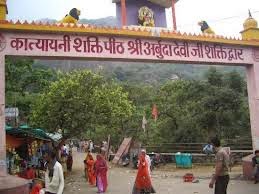
arbuda devi,mount abu
Arbuda devi temple,mount abu
Arbuda DeviTemple,Mount abu

Arbuda DeviTemple

Adhar Devi Temple is situated atop a cliff and you have to climb a flight of 365 steep stairs to reach this place. The journey though strenuous is rewarding in ways more than one. You get a bird's eye view of the city from above the temple. It is situated 3 kilometers from the main town of Mount Abu. The inner shrine is reached by crawling a narrow cave. The whole temple is constructed of one huge solid piece of rock and is one of the best specimens of rock cut temples in India.
Situated in a cave, The Adhar Devi Temple is one of the popular religious themed tourist destinations in the Mount Abu region. It is situated three kilometers north of the main town of Mount Abu. The Adhar Devi Temple can be reached by climbing up 365 stairs carved into the mountain. The temple itself is located inside a rocky cleave and is reached by crawling through a small opening into the cave. The Adhar Devi Temple is dedicated to the Goddess Durga. It got its name because the legend has it that "Adhar" of the Mataji (Goddess deity) fell here, also it was believed that the image of the goddess could be found there hanging in mid air. As well as being a popular tourist destination, the Adhar Devi Temple is also a common destination for many religion pilgrimages. The Adhar Devi temple receives most pilgrims during the 9 days of the holy Navratri season.
The Adhar Devi temple contains many beautiful statues, and those that make the effort to climb the stairs are rewarded with many picturesque views of the surrounding mountains and forests. The climb up to the Adhar Devi temple can be a difficult one so it is recommended that you wear appropriate clothing and footwear. You should not be turned off by this walk as the scenic views surrounding the temple and the wondrous beauty inside make this climb worth the effort.

Gaumukh Temple,Mount Abu

Gaumukh temple,mount abu

Gaumukh Temple,Mount Abu

The Gaumukh Temple as name suggest is made in the form of mouth of an cow.The Sage Vashishtha lived here with his wife and the wish fulfilling cow, gifted to him by the Devas, after they obtained it from the churning of the ocean, with eight other jewels! He is credited to have brought Nandi Vardhan Mountain, the youngest son of Himalayas, to Mount Abu. The incredible flying snake, Arbud Naag, who brought the gargantuan mountain from the South on its back, demanded the mountain to be named after him as "Arbudanchal" for the recognition of his services in bringing the great mountain from the South to its present address.

There is also a tank that you should visit- the Agni Kund. The Agni Kund is believed to be the site of a sacrificial fire which Saint Vashishth used to perform the yagni from which the four clans were born.The cow is considered a sacred animal by those who make religious pilgrimages to the Gaumukh Temple and nearby the temple you will find a spring that is believed to have emerged from the mouth of a rock that is shaped similar to a cows head. A large marble statue of a cow has been built on the site. The bull is representative of Nandi, who was Shiva’s vehicle. There is a stream of water that flows from the mouth of the marble bull. Nearby you will find statues of Nandi, Saint Vashishth, Lord Ram and Lord Krishna.

It is authentically mentioned in Van Perva of Mahabharata, where Sage Ved Vyas sways Dharma Raj Udhishtar to spend one night at Vashishtha Ashram, and further enlightens that a night's stay at the Ashram would bless him with the blessing, equivalent to giving one thousand cows in charity.

Achalgarh fort,Mount Abu

Achalgarh,Mount Abu
Achalgarh fort in Mount Abu<title> <meta name="keywords" content="achal garh fort,achaleshwar mahadev,achaleshwar temple,mahadev temple,mahadev mandirneelkanth mahadev mandir"/> </head> <body> <h1>Achaleshwar Mahadev Temple ,Achalgarh in mount abu</h1> <p>The fort was originally built by the Paramara dynasty rulers and later reconstructed, renovated and named as Achalgarh by Maharana Kumbha in 1452 CE, one of the several forts built during his reign.</p> <p>A temple more than 2500 years old. It is the only place on earth where the great toe of Lord Shiva is worshiped, that is estimated to be going to the centre of the earth. It is the proud possessor of the glory of rich mythology, theology, folklore and even history. Miracles happened in its hallowed precincts. It is none other than the Achaleshwar Mahadev Temple! Its Nandi, made of an alloy of five different metals, is credited with the marvel of repulsing the Muslim invaders by releasing millions of bumble bees to attack the Muslim marauders. They were the lessons learned by those in charge to preserve and protect the sanctity of the pristine temple that they devised a very injurious, albeit ingenious method of camouflaging the prominence and the eminence of the great temple.</p> <h2>Achalgarh Fort</h2> <p>Surrounded by massive battlement walls and located at the top of a mountain peak is the 15th century fort of Achalgarh that was commissioned by Rana Kumbha. Enclosed within the fort are some beautiful Jain temples and the 9th century temple of Achleshwar whose claim to fame is its 4 ton panchdhatuidol of Nandi (made of gold, silver, copper, brass and zinc). A pit that is said to reach to the netherworld and a scenic lake known as the Mandakini lake are located nearby. </p> </body> </html></div> <script type='text/javascript'>createSummaryAndThumb("summary2933507578599136238");</script> <div style='float:right;padding-right:10px;margin-top:10px;'> <a class='morer' href='https://all-rajasthan.blogspot.com/2014/05/achaleshwar-mahadev-temple.html'>Read More</a> </div> <div style='clear: both;'></div> </div> <footer class='entry-metanbt'> <div class='entry-metanbt'> <a href='https://all-rajasthan.blogspot.com/2014/05/achaleshwar-mahadev-temple.html#comment-form' onclick=''>No comments</a> | </div> </footer> </article> <div style='clear: both;'></div> </div> <div class='post-outer'> <article class='post hentry' itemprop='blogPost' itemscope='itemscope' itemtype='http://schema.org/BlogPosting'> <meta content='https://blogger.googleusercontent.com/img/b/R29vZ2xl/AVvXsEju7SvxK6JlCYR1BoNvJw-ZBCXowSfz5rt26MQltb4V4pa1Av04dJNCMPYIIVGy1blloVflfq4_lYrC52NcTfalhxX0c-lzUocXp00aNob1UAK0mtXtXaUvVEkqj_2qGn74LQgyw4Nsp4Q/s400/md.jpg' itemprop='image'/> <a name='880785972062936049'></a> <header class='entry-header'> <h1 class='post-title entry-title' itemprop='name'> <a href='https://all-rajasthan.blogspot.com/2014/05/dilwara-jain-templemount-abu.html'>Dilwara Jain Temple,Mount Abu</a> </h1> </header> <div class='post-header-line-1'></div> <div class='post-body entry-content' id='post-body-880785972062936049' itemprop='articleBody'> <div id='summary880785972062936049'><div dir="ltr" style="text-align: left;" trbidi="on"> <table align="center" cellpadding="0" cellspacing="0" class="tr-caption-container" style="margin-left: auto; margin-right: auto; text-align: center;"><tbody> <tr><td style="text-align: center;"><a href="https://blogger.googleusercontent.com/img/b/R29vZ2xl/AVvXsEju7SvxK6JlCYR1BoNvJw-ZBCXowSfz5rt26MQltb4V4pa1Av04dJNCMPYIIVGy1blloVflfq4_lYrC52NcTfalhxX0c-lzUocXp00aNob1UAK0mtXtXaUvVEkqj_2qGn74LQgyw4Nsp4Q/s1600/md.jpg" imageanchor="dilwara jain temple" style="margin-left: auto; margin-right: auto;"><img alt="dilwara jain temple ,mount abu" border="0" src="https://blogger.googleusercontent.com/img/b/R29vZ2xl/AVvXsEju7SvxK6JlCYR1BoNvJw-ZBCXowSfz5rt26MQltb4V4pa1Av04dJNCMPYIIVGy1blloVflfq4_lYrC52NcTfalhxX0c-lzUocXp00aNob1UAK0mtXtXaUvVEkqj_2qGn74LQgyw4Nsp4Q/s400/md.jpg" title="dilwara temple " /></a></td></tr> <tr><td class="tr-caption" style="text-align: center;"><span style="background-color: #efefef; color: #222222; font-family: arial, helvetica, sans-serif; text-align: -webkit-left; white-space: nowrap;">dilwara Jain temple </span></td></tr> </tbody></table> <html> <head> <title>dilwara temple,Mount Abu

Dilwara Jain Temple

The Dilwara Jain Temple are known for its well known Architecture,sculpture and beauty.The Jain Delwara temples of India are located about 2½ kilometres from Mount Abu, Rajasthan's only hill station. These temples built by Vastupal Tejpal[1][2] between the 11th and 13th centuries AD are world famous for their stunning use of marble. The five legendary marble temples of Dilwara are a sacred pilgrimage place of the Jains.
There are five temples in all, each with its own unique identity. Each is named after the small village in which it is located. These are:
Vimal Vasahi, dedicated to the first Jain Tirthankara, Adinath. Luna Vasahi is dedicated to the 22nd Jain Tirthankara, Neminatha. Pithalhar is dedicated to the first Jain Tirthankar, Rishabha. Parshvanath is dedicated to the 23rd Jain Tirthankara, Parshva. Mahavir Swami is dedicated to the last Jain Tirthankara, Mahavira. The most famous of these are the Vimal Vasahi and Luna Vasahi temples.

Nakki Lake,Mount Abu

nakki lake,mount abu
Nakki Lake view during sunset
nakki Lake(jheel)

Nikki Lake in Mount Abu

As name suggest Nakki means 'Nails' i.e the lake dug by nails.It is the largest manmade lake at the height of 11, 00 meters in India then on the other hand it is romantically called the love lake of Mount Abu; at the same time it is the sacred lake for the proud Garacia tribe. The later come to the lake on their festival in Shukla Paksha in April to worship and remember their ancestors, and consecrate their nails, (hence one more reason for the name Nakki). There is very intresting story behind this lake .It is a very ancient sacred Lake, according to the Hindu legend. It is called by this name because it was dug out from Nails (Nakh).

One story is of dug by Gods to live in, for protection against the Bashkali rakshash (a wicked demon). While other is of Rasiya Balam (a sculpture of Dilwara Jain temple), who dug the lake, as the king told that whoever will dug the lake within one night I will marry my daughter to him. But later king's wife refused and he couldn't marry the king's daughter. Temple of Rasiya Balam and Kunwari Kanya (king's daughter)'s is located behind the Dilwara Jain temple.It is said that the sage was the incarnation of Lord Shiva and the king's daughter was the embodiment of Ma Parvati. It is predicted that they would return again and then there would be upheaval in the universe.

MOUNT ABU tourism places in Rajasthan,India

mount abu tourism
Mount Abu Tourism

MOUNT ABU unique destination for Tourism

Information
State: Rajasthan
Famous for/as: Hills
Altitude: 1164 M
Pincode: 307501
District: Sirohi
Language: Hindi
STD code: 02974
Weather: Summer 32 To 45°C, Winter 5 To 28°C

Mount Abu is the most famous hill destination in Rajasthan. It is located in the Sihori district, and is 58 km fromPalanpur. Known earlier as Arbudaanchal, Mount Abu has its throne fixed as the highest peak in Aravali Range of Rajasthan.

Mount Abu has an interesting history. Historians believe that the original residents of Mount Abu were Gurjars. Theassociation of Gurjars with Arbuda mountain (Mt Abu) dates back in many inscriptions and epigraphs found from thisregion. As early as in 6th century AD, Gurjars located themselves in Arbuda Mountain and many parts of Rajasthan andGujarat. In mythology, it is said that Saint Vasistha performed his final recites and retired to the hils of Mount Abu due to his diferences with sage Vishvamitra.

Located at a height of 1220 meters from sea level, Mount Abu definitely gets an extra advantage as a tourist spot because this is the only single hil station in Rajasthan. Visitors come here from nearby parts of Rajasthan and Gujarat to get away from the summer heat and relax and unwind in the pleasant weather and comfortable climate of the place.The greenery al around adds to the beauty of the hil town.

Mount Abu has many other spots that require special mention. This hil station is a place for many Jain Temples. The internationaly acclaimed Dilwara Temples are a group of temples with beautifuly carved white marble, which were built during 11th and 13th centuries AD. Achalgargh, an old fort, built in the 14th century by Rana Kumbha of Mewar, is also a spot that can be visited. The fort in itself encloses many Jain Temples - Achaleshwar Mahadev Temples and Kantinath Temple. For the devotees of Hindu goddesses, there is the Durga Temple and Ambika Mata Temple, which is located on a clif in Jagat, near Mt Abu.

Another popular location is Nakki Lake in Mount Abu. There are toad rock stands near the hily area surrounding the Nakki Lake region. Within a few kilometers from Nakki Lake are Raghunath Temple and Maharaja Jaipur Palace where the Emperor of Jaipur lived for several years.

Mount Abu has the World Spiritual University and head quarter of the Bhrama Kumaris, a wel known sect, and theirfolowers located at Madhuban. There are lectures and spiritual courses for devotees and interested students.

The best way to get around Mount Abu is either on foot, or preferably, by hiring a two-wheeler which most of the hotelsorganise for their guests. Tourists can shop for many items but the silver jewelery sold here is worth a mention. Themarket adjoining the Nakki Lake is where tourists can buy silver jewelery in various interesting and intricate designs, but bargaining is a must.

Food available in Mount Abu is nothing exceptional. But, the hil station does have many ice cream shops that ofer localy made and branded ice creams, which tourists can enjoy on a chily evening.

February to June and September to December is the peak tourist season of Mount Abu. However, many also visit Mount Abu during the summer season to escape the heat of the plain areas.

Mount Abu is wel connected to major cities of the country. The nearest railway station is on Abu Road, 28 km from the hil station, which connects it to many cities including Ahmedabad, Mumbai, Delhi and Jaipur. The nearest airport to Mount Abu is in Ahmedabad and Udaipur. The Sardar Valabhai International Airport in Ahmedabad is wel connected to other cities in India. Regular buses from Jaipur, Udaipur and Ahmedabad travel to Mount Abu.

How to Reach Mount Abu

By Air
The nearest airport to Mount Abu is Maharana Pratap Udaipur Airport, Dabok (Udaipur) 207-km. One can hire a taxi to get to Mount Abu.
By Train
The nearest railway station is Abu Road (29-km) situated on Mumbai-Ahmedabad -Ajmer-Jaipur-Delhi route. From Abu Road one can take a taxi, jeep or bus to Mount Abu.
By Road
Ahmedabad is 222-km via Palanpur. Jodhpur is 235-km via Sirohi and Pali. Udaipur is 156-km via Pindwara. (Journey on this route is advisable only during the day). Jaipur is 509-km via Pali-Ajmer. It is connected to all the major towns in northern and western India.
Local Transport
Unmetered taxis are available for local transportation within the city.

mount abu weather

Although the Mount Abu is rich in green forest and Aravali Mountain Range and due to plenty of rain-fall it have moderate climate.

Summers:- 31-34 degree celcius.
Winters:- 10 to -8(during nights) degree celcius.
Best Season : Mid-March to June and Mid-September to December

Things that should u know about Mount Abu

"Mount abu is hil station situated on Shirohi distric of Rajasthan at about 5700 feet above sea leavel with yearly atmosphire ranging from 28 to-4, summer to winter.it is a place that appeals every age and tate of life from honey mooner(being lover paradise),to leisures, nature lovers to pilgrimers.

Food, sight-seeing and shopping:

FOOD:-traditional appetiser jal -jira,food 'dal-bati',and traditional sweets namely,'rabadi','churma','jangari',with elegant gujrati thali is specility of place.though other food like chinees,punjabi,south indian,continentals.,veg and non veg available at various restaurants and hotel.

RESTAURANT :-bikhi restaurant of hotel saraswati(Gujrati thali), mayur rest. of hotel hil loc , restaurant of hotel chacha inn ,vina restaurantscnear taxi stand polo ground, arbuda near pologround-dhadadhad mahadev temple ,chaha cafe near chacha musume r good food provider to my experiance.

SIGHT-SEEINGS:-places to visit includes,Nakkhi lake at heart of Mount Abu,PalanPur points,Vasistha Ashram (some 700staircases down the hil from Palan Pur point),Tod Rock,sunset point, Anadra point(also known as honemoon point),Pondo van and Om Shanti Bhavan (spiritual exibition of Brahamakumaris, mountis also global head quater of Brahama Kumaris),Addhar Devi temple(a katyayani mata sakti pith),delwara jain temple (famous for marvelous marble sculpturs and architech),trevor tank (wild life century),acchal garh (achhaleswar mahadev temple),peace park flower garden(of brahama kumaris)guru sikkhir(guru daatatrey dev temple with paduka and also higest peak of mount abu,here loard stil belived to stay at night ) .,further one should visit FAMOUS TEMPLE OF GODESS AMBAJI MATA IN GUJRAT WHICH IS ONLY 30 KM FROM ABU ROAD AND 48 KM FROM MOUNT ABU(here elegant gujrati desiner cloths specialy for ladies and article of marbles are worth buying being cheap.

SHOPPING:-at chcacha musume, piccadili plaza,rajastham emporiou and many other shopes around nakkhi lake.one can buy textiles and clothing of traditional rajasthani designe,metal sculptures, decorative leather foot wears and other leather articles,stone and metal jewleries,wooden articles ,show articles, and wooden toys of rajasthani traditions.and mehandi designe sets and glass toys is specilities of articles available at (guru sikkhar ,the higest peak of mount), and local herbers such as shilajeet,musk fagrance etc to name few sold by local vilagers can be bought but with carefulness of imitation.

Activities & things to do:
ACTIVITIES:-boating at nakkhi lake , morning walk along nakki lake circut road,tracking ,medation and spritual leasson at brahamakumaris,spend time at delwara jain temple to have real sence of sculpture and arcitech that have on our body mind and soul,ringin bel at gurusikkhar(daatatrey peak)

Travel tips, How to reach, travel warnings etc:

Mounts Abu is 200km by road from Ahmedabad city of Gujarat. this being nearst airport, and Indian railway junction with good train availability(from where trains to foot hils of mounts abu,namely 'Abu road station'is available with ease,and excelent roads aporching mounts from Ahmadabad and also state transport corpration runs bus facilities avaliable .one can hire vehicals also .Mount Abu can be also reached from Jaipur ,Udaipur as nearst airport in Rajasthan state.by road it is aprox .250 km from Udaipur and 400 km from Jaipur.those traveling from state of Rajasthan side can aproches this way.

WARNINGS:-climate during summer is very hot below hils in Rajasthan and nearing state Gujarat about 32-46 degree celcious.so chance of thermal shock to those not habituated to such climate. further liquor is prohibited in Gujarat ,the nearing state .

mount abu sightseeing

Delwara Temple
Achal Garh
Tod Rock
Gaumukh Temple
Adhar Devi

Amber Palace,Jaipur

amber fort,jaipur
Amber fort
Amber Fort in Jaipur

Tour to Amber fort,Jaipur

Timings : Duration of Openings (Hrs.): 8.00-17.30 Entry Fee (In Indian Rupees): Indian : 25 Foreigner : 200 Tel: 2530293 Built in 1592 Built by Raja Man Singh I with additions by Sawai Jai Singh Materials Sandstone Amer palace ,is situated on a Aravali Hills ,above the Maota lake near Amer village ,about 11 k.m from Jaipur city,the capital of Rajasthan. The aesthetic ambiance of the palace is seen within its walls on a four level layout plan (each with a courtyard) in a well turned out opulent palace complex built with red sandstone and marble consisting of the Diwan-e-Aam or the "Hall of Public Audience", the Diwan-e-Khas or the "Hall of Private Audience", the Sheesh Mahal (mirror palace) or Jai Mandir, and the Sukh Niwas where a cool climate is artificially created by winds that blow over the water cascade within the palace. Hence, the Amer Fort is also popularly known as the Amer Palace. The palace was lived in by the Rajput Maharajas and their families. At the entrance to the palace near the fort’s Ganesh Gate, there is also a temple dedicated to Sila Devi, a goddess of the Chaitanya cult which was given to Raja Man Singh when he had defeated the Raja of Jessore, Bengal in 1604. (Jessore is now in Bangladesh)
Amer fort was built by Maharaja Man Singh I in 1592.Amer Palace, was created in the late 16th century, as a larger palace to the already existing home of the rulers. The older palace, known as Kadimi Mahal ( persian for ancient) is known to be the oldest surviving palace in India. This ancient palace sits in the valley behind the Amer Palace. Amer was known in the medieval period as Dhundar (meaning attributed to a sacrificial mount in the western frontiers) and ruled by the Kachwahas from the 11th century onwards – between 1037 and 1727 AD, till the capital was moved from Amer to Jaipur.The history of Amer is indelibly linked to these rulers as they founded their empire at Amer.
Earlier to the Kachwahas, Amer was a small place built by [Meenas] in the town they consecrated to Amba, the Mother Goddess, whom they knew as `Gatta Rani' or `Queen of the Pass'.The Amer Fort, as it stands now, was built over the remnants of this earlier structure during the reign of Raja Man Singh, the Kacchwaha King of Amber.The structure was fully expanded by his descendant, Jai Singh I. Even later, Amer Fort underwent improvements and additions by successive rulers over the next 150 years, until the Kachwahas shifted their capital to Jaipur during the time of Sawai Jai Singh II, in 1727.
Many of the ancient structures of the medieval period of the Meenas have been either destroyed or replaced. However, the 16th century impressive edifice of the Amer Fort and the palace complex within it built by the Rajput Maharajas are very well preserved
.

Moti Dungri-Ganesh Temple,Jaipur

moti dungri ganesh temple,jaipur
Moti dungri temple

Moti Dungri-Ganesh Temple,Jaipur

Location – Moti Doongri Rd, Tilak Nagar, Jaipur, Rajasthan Built In – 1761 AD Built by – Seth Jai Ram Paliwal Morning Time – 5:00 am – 01:30 pm Evening Time – 4:30 pm – 9:30 pm According to Hindu scripts before starting any important work pooja of Lord Ganesha is performed,so that they get sucess in their work.Lord Ganesh, the elephant headed deity in Hinduism considered as the God of auspiciousness, wisdom, knowledge and wealth.
The Moti Dungri ganesha temple is situated on a small hill on the heart of Jaipur was constructed by seth Jai Ram Paliwal in the early eighteenth century.
It is said that once the king of 'Mewar'was returning back to his palace from a long journey with a colossal 'Ganesh' idol on a bullock cart.He decided to build a temple and consecrate the idol of Lord Ganesha wherever the bullock cart is halted for the first time.It stopped at the foot of the Moti Dungri hills where the temple is situated today.It was completed in 1761.
Ganesh Chaturthi is celebrated of the day of incarnation of Lord Ganesh ji on Chaturthi Tithi, Shukla Paksh, Bhadrapada. Krishna Janamashtami is celebrated of the day of incarnation of Lord Krishna on Ashtmi Tithi, Krishna Paksha, Bhadrapada. Annkuta is celebrated on the next day of Diwali. Paush Bada is celebrated on any suitable day of Paush month.

Birla Lakshmi Narayan Temple,Jaipur

birla temple
laxmi narayan temple,Jaipur
Birla Lakshmi-Narayan Temple

Birla Temple,Jaipur

Timings All days of the week 5:00 AM - 9:00 PM Birla Lakshmi-Narayan Temple,is a Lord vishnu temple,located on Moti Dungri hill,Jaipur(Rajasthan).The enormous temple was built during the year 1988,by Birla group of Industries,one of the bussiness tycoons of India.The Temple is dedicated to lord Vishnu(Narayan),the preserver and his consort Lakshmi,the Goddess of wealth. Due to this reason,Birla Temple is also known as Lakshmi Narayan Temple.Birla Mandir is constructed in the finest quality of white marble. The temple exterior has carved sculptures of various mythological proceedings.The images of the dieties are placed in the sanctum sanctorium.
The best time to visit Birla Lakshmi-Narayan Temple is at evening.

Albert Hall Museum,Jaipur

Albert Hall,Jaipur Albert Hall Museum,Jaipur Timings :
Duration of Openings (Hrs.): 9.00-17.00
Entry Fee (In Indian Rupees):
Indian : 20
Foreigner : 150
Tel: +91 141 2570099
Address: Ramniwas Bag, Adarsh Nagar, Jaipur, Rajasthan 302004

Albert Hall Museum is named after King Edward VII (Albert Edward), during whose visit to the city as the Prince of Wales, its foundation stone was laid on 6 February 1876.Albert Hall Museum is situated in the middle of the capital city of Rajasthan,Jaipur also known as Pinkcity.The Ram Niwas garden increases beauty of museum by its huge complex with small pools and fountains,flourishing lawns and beautiful flower beds all around was basically a famine relief project.The Ram Niwas bagh is always been a place of recreational activities since the reign of Maharaja Swai Ram Singh.This park would come alive with the setting sun.

History of Albert Hall Museum,Jaipur

Albert Hall Museum was designed by Sir Swinton Jacob, a British architect who designed many palaces in Rajasthan. Combining the elements of English and north Indian architecture – it was known as the pride of the New Jaipur when it opened in 1887 AD. It is a very well maintained and impressive building displaying a rich collection of artefacts like paintings, carpets, ivory, stone, metal sculptures, colourful crystal works etc. The Albert Hall museum undergoing renovation. Right opposite the Albert Hall is one of the oldest zoos in the country, harbouring different species of birds and animals. Another piece of attraction near Albert Hall is the Ravindra Rang Manch (theatre) with a modern art gallery and a performing arts theatre, both indoor and open air.

Jantar Mantar, Jaipur

Jantar mantar by swai Jai sing in Jaipur

Jantar Mantar, Jaipur

Duration of Openings (Hrs.): 9.00-16.30 Entry Fee (In Indian Rupees): Indian : 40 (15 Student) Foreigner : 200 (100 Student) Tel: +91 141 2610494

The Instruments of the Jantar Mantar,Jaipur

Like its Delhi counterpart, the observatory at Jaipur consists of nine different instruments of which smaller implements, such as the sextant and the astrolabe, are contained within. The Jantar Mantar is unique in this aspect as these are still in an excellent state of repair, unlike in Delhi:
The Samrat Yantra The Dakshino Bhitti Yantra The Digamsa Yantra The Rashi Valaya Yantra The Jai Prakash Yantra (Great and Small) The Shastansha Yantra The Unnatasha Yantra The Narivalaya Uttar Gola Yantra The Rama Yantra The functions, operation and coordinate measurements of these nine instruments vary. Some of them actually complement one another -- for example, the Digamsa Yantra was built to complement the Samrat Yantra because of the latter’s limitations in taking azimuthal and altitudinal readings of the stars in certain positions.

The Samrat Yantra in Jantar Mantar, Jaipur

The Samrat Yantra (Supreme Instrument) dominates the landscape of the observatory and is very much the crowning glory of the Jaipur observatory. Widely accepted to have been constructed by Jai Singh himself in 1724, its aspect and rationale is not unfamiliar in any astronomical context: in essence it is a large sundial. Hence its principal purpose was to conduct solar time-reading duties. Additionally, as an extrapolation of its function, it was able to trace the path of stars, reveal the duration of day-night, and verify the location of the Pole Star. Versions of the Samrat Yantra may be found at all the observatories built by Jai Singh; indeed also in other archeo-astronomical sites around the world.13 It is certainly not a departure from the primary time-telling concept of the simple sundial and bears testament to the evergreen fundamentals which form the backbone of modern-day astronomy.
The Jantar Mantar at Jaipur thus evidently served a different purpose from that of Delhi. The latter was essentially built for the sole purpose of improving the Indian astrological tables and calendar. These had already been completed by the time the Jaipur observatory was constructed, thus obviating the need for further astronomical data collection. Instead, the Jantar Mantar at Jaipur was built mainly for religious purposes. With the benefit of hindsight, his judgement in abstaining from the use of sighting equipment apposite to instruments of that age is perhaps more related to Hindu philosophy: depiction of the cosmos and godly realms endow upon the expert the mandate of knowledge and power over this world far exceeding the information they truly provide. In doing so, Jai Singh would then have become the apotheosis of all things divine.

The Small Jai Prakash Yantra in Jantar Mantar, Jaipur

The Small Jai Prakash Yantra is a complete hemisphere made of sections of white marble sunk into a horizontal platform with its top open. This sunken hemisphere, as described, inversely represents the celestial sphere above it. As such, the North Celestial pole is laterally inverted in with respect to the surface of the hemisphere in comparison with the celestial sphere. This enables easy reading for the observer. The diagram should clearly illustrate this concept. This is, in essence, similar to the concept of seeing the sun moving clockwise in the northern hemisphere and counter clockwise in the southern hemisphere, i.e. things appear laterally inverted if views are taken from vertically opposite sides of the earth.

Jai Prakash Yantras in Jantar Mantar, Jaipur

The Great Jai Prakash Yantra It was the limitation of the Small Jai Prakash Yantras that caused Jai Singh to build the Great Not only was the hemisphere enlarged substantially, the surface was divided into sections. Each alternate slab was reassembled into a second hemisphere. In the second hemisphere the pieces were assembled in such a way that the gaps between the pieces would fit exactly into the position of the pieces in the first hemisphere, such that the two hemispheres when fitted together make a whole. The drawing below should illustrate this clearly.

The Rama Yantra in Jantar Mantar, Jaipur

The Rama Yantra was used to measure both the position of the sun and stars. Unlike the Jai Prakash Yantra, which used a ring as its gnomon, the Rama Yantra used a stick in the center of a flat elevated circular scaled surface as its gnomon. Also, it used only one coordinate measurement system, instead of two. It was based on the horizon and zenith system.

The Digamsa Yantra in Jantar Mantar, Jaipur

The design and function system of the Digamsa Yantra was relatively less complex than the Jai Prakash and Rama Yantras. The only purpose it was built was to provide accurate azimuthal readings to complement the Rama Yantra.

The Rashi Valaya Yantras in Jantar Mantar, Jaipur

As mentioned above, the manner in which the Rashi Valaya Yantras were constructed was similar to the Samrat Yantra. However, the slope of the gnomon of each of the twelve Rashi Valaya Yantras varied with respect to the horizon and pointed in different directions. The twelve Rashi Valaya Yantras were intended to be built symmetrically on a platform that represents the horizon. However, the symmetry was somewhat broken to an extent by the positions of the Aquarius and Gemini Yantras which were shifted a southward with respect to the Sagittarius and Leo Yantras at the other and of the symmetrical formation. Save in the pictures below.
jantar mantar,jaipur